
Shifts in Player Demographics Within Live Casino Environments Following Mobile Accessibility Standards Updates
Data from industry tracking services shows that live casino platforms experienced measurable changes in player demographics after mobile accessibility standards received major updates in late 2025, with further refinements rolling out through mid-2026. These changes included broader age ranges, shifts in geographic distribution, and adjustments in gender participation rates, according to aggregated analytics from multiple operators.
Background on the Accessibility Updates
Regulatory bodies and platform developers aligned live dealer interfaces with enhanced mobile standards that addressed screen reader compatibility, touch target sizing, and real-time captioning for dealer interactions. The American Gaming Association published findings indicating these modifications expanded functional access for users with visual or motor impairments while also improving general usability across devices. Operators implemented these changes progressively, and by August 2026 several major platforms reported completion rates above 85 percent across their live tables.
European operators followed similar timelines under guidelines coordinated through cross-border industry groups, which produced comparable technical requirements. Researchers at the University of Nevada, Reno tracked user session data before and after implementation and documented increases in average session duration among previously underrepresented groups.
Observed Demographic Adjustments
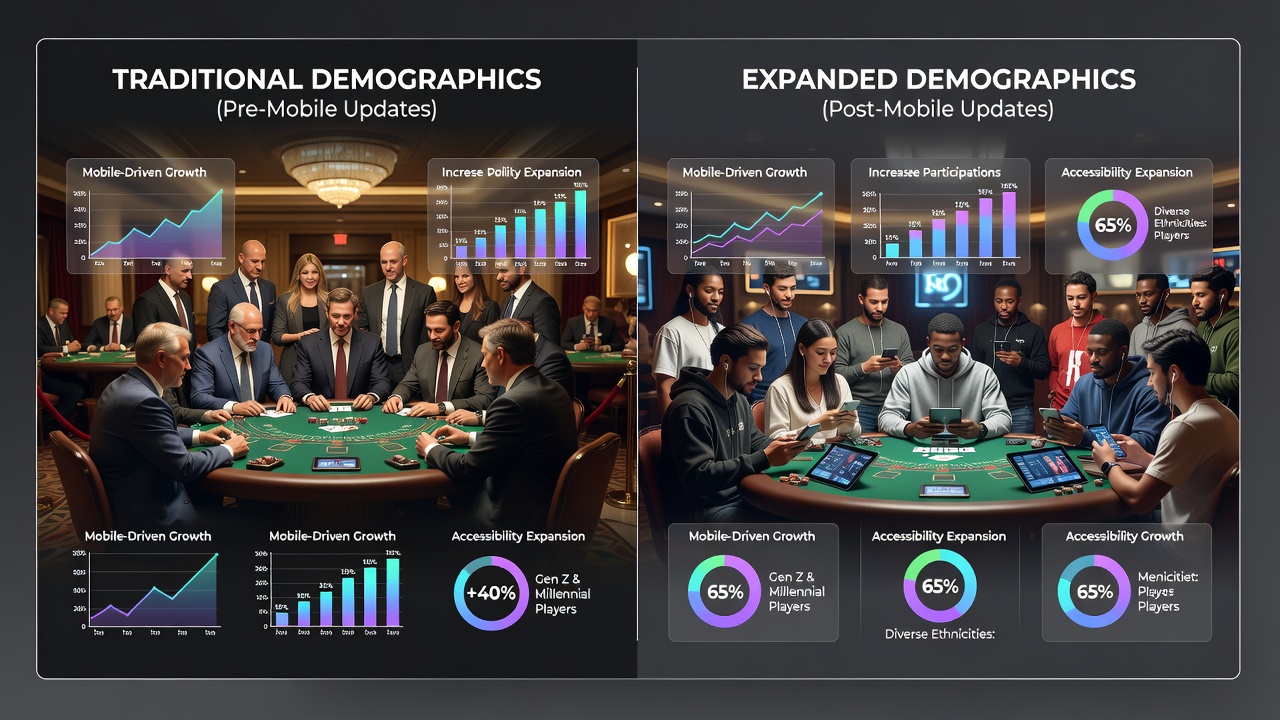
Analytics platforms recorded a rise in participation from players aged 55 and older, with mobile session shares growing from 22 percent to 34 percent in sampled markets between January and August 2026. At the same time, the 18-to-34 cohort maintained its volume but showed higher frequency of shorter, mobile-only sessions. Gender splits moved from a traditional 70-30 male-to-female ratio toward 62-38 in several regions, with the largest gains appearing among female users accessing tables via tablets.
Geographic patterns also shifted. Markets in Canada and Australia recorded notable upticks in new mobile registrations from suburban and rural postcodes, areas that previously showed lower engagement with live dealer formats. Data indicates these increases coincided with improved performance on mid-range Android devices common in those locations.
Regional Variations and Supporting Data
North American operators reported the most pronounced changes in age distribution, while Asian markets showed steadier but smaller adjustments concentrated in the 35-to-44 bracket. A collaborative report issued by the Gambling Regulatory Authority of Singapore and academic partners noted parallel trends in Southeast Asia, where mobile accessibility improvements correlated with higher repeat participation from users who had previously cited device compatibility issues.
Live environments adapted in observable ways. Dealers began incorporating visual cues and slower pacing options that benefited the expanded user base, and platform analytics showed reduced drop-off rates during peak evening hours. Those who studied these patterns found that accessibility features introduced for compliance purposes also supported casual play styles that appealed across demographics.
Impact on Platform Operations
Operators adjusted staffing and table configurations to accommodate the new mix. Some sites introduced dedicated mobile-first tables with simplified betting interfaces, while others maintained standard tables but added optional accessibility toggles visible to all users. Session data compiled through August 2026 indicated that these hybrid approaches helped retain both legacy and newer player segments without requiring separate lobbies.
Payment and verification processes also evolved alongside accessibility updates. Streamlined mobile KYC flows reduced onboarding friction, which researchers linked to higher completion rates among first-time users in the 45-plus category. Industry reports tracked a corresponding decline in abandoned registrations during the same period.
Conclusion
By August 2026 the cumulative effect of mobile accessibility standard updates had produced documented shifts in who participates in live casino environments and how they engage. Continued monitoring by regulatory agencies and academic researchers will clarify whether these patterns stabilize or evolve further as platforms refine their implementations. The available figures show clear movement in age, gender, and geographic participation metrics tied directly to the technical changes rolled out over the preceding year.